
the cabin game Review
Steam consensus, the $11.99 co-op case, and the Early Access bugs that still wipe nights.
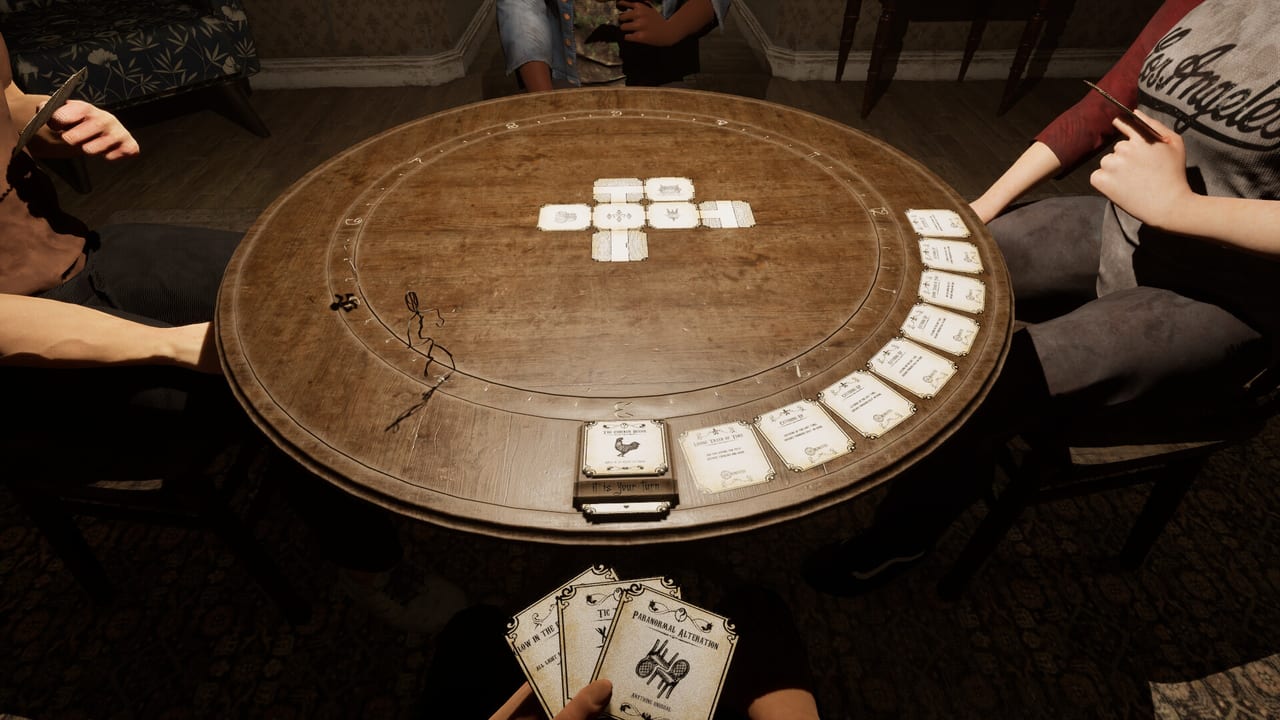
the cabin game is a 1–4 player horror loop from Twisted Corridor, in Early Access on Steam Windows. You sit at a round table, play from a 30+ card deck, then stand up and walk a cabin those cards just built. English is the only interface and full audio; localization is planned. The list price is $11.99 USD, the same figure the studio says will hold after Early Access. This page is a player-consensus review of that Early Access build, not a 1.0 score and not a recap that pretends the loop is finished.
The game entered Early Access on 27 August 2026. Steam’s recent player reviews sat at 100% positive on a small sample of about 46 reviews. That percentage is a real signal and a small sample. Read it as “groups who finished a night with friends liked the sit-and-stand loop,” not as a promise that Neighbour will keep your client alive or that a solo dining-room escape will always draw.
Press M in-game before you write the rules off as hidden. A large share of first-hour confusion is people who never found the tip overlay. Then come back here for the buy/wait question.
What people are comparing it to
Steam blurbs and table talk keep naming the same cousins: Betrayal at House on the Hill (a house that mutates as tiles and cards hit the table), Jumanji (a board that becomes a room you have to survive), and The Cabin in the Woods / 山中小屋 (a cabin that is also a machine for throwing monsters at you). The comparison is about structure, not licensed content. You are not playing those products. You are playing a first-person cabin whose floor plan is a card layout, with 12 monsters in the current mix and more Event Cards on the roadmap.
If that sentence sounds like your group’s idea of a good Friday, the $11.99 ask is aimed at you. If you wanted a finished single-player campaign with a tutorial that names every clue object, Early Access is not hiding that gap. It is the gap.
Who the $11.99 is for
Buy it for a co-op group. The store copy is honest: 1–4 online co-op or solo, carry or get carried, and a final hour where you escape together, die together, or every player for themselves. Four people on one clock is the pitch. Candy at the Boo Factory is extra chaos for later nights, not the reason to pay.
Read Getting Started before you host. Then keep Survive Events open, because Event Card minigames are poorly explained and a loss pulls the ghost closer on the table track. Winning often has no reward. That asymmetry is design, not a missing loot table.
Solo is supported, but it is a different product feel. Fewer hands mean fewer cards on the table, which means a required Room Card might never appear. Time-skip cards pad two-hour runs. If you are buying only to play alone, read Solo first and do not copy a four-player review score onto a one-body night.
What the loop does well
The sit-and-stand split is the hook. Cards are not flavour text; they rewrite hallways you then have to run. Investigation is object-dependent, closer to a Phasmophobia evidence sweep than to a key hunt. The win condition is identifying the correct escape room from evidence, then entering it before the clock hits 12 and before the monster pawn catches the player pawn. That double fail-state is why groups stay on voice.
Room placement has late-game teeth. A cute Cellar at 2 o’clock is a coffin when Attic Stalker or a giant monkey owns the only door. Player consensus is consistent: unlock connected rooms first, prefer a loop, then spam investigation. Stalling feels safe and is not. Event Cards can spawn across the map you were so proud of.
The First Round Patch already answered the loudest mix complaint (a separate clock audio slider), made Attic Stalker more forgiving, removed monkey collision so he does not block narrow halls, adjusted popcorn balls, made the FPS cap apply, made totems droppable, unstuck AI, reduced chase speed, and maybe fixed the end-game forest teleport. That is a studio listening during Early Access, which is part of why the Steam sample is so positive. Details live on patch notes.
What still hurts
Neighbour can drop darkness, and some clients crash. That is a session-killer, not a jumpscare. File it on the official Discord; do not pretend a lobby pet will patch it. Settings is the practical first move: Low graphics, VSync off, FPS cap on, clock slider below master. Optimisation is still an Early Access complaint. Hitching in the forest or during a chase shows up next to the praise in the same review threads.
The clue tutorial is missing in any useful sense. Evidence lives on objects that may or may not exist in the cabin you built. If nobody writes presence and absence down, you guess at 11:50 and wipe. That is a teaching hole, not a puzzle. Use the clue notebook until a later unique progress card or a real tutorial lands.
RNG is the other honest knock. The deck is shuffled every run. Solo and unlucky four-player tables can fail because a required room never drew. Time-skip cards and progress cards that shove the monster pawn can eat the identification window without teaching you anything. The four-leaf clover minigame is a player complaint for a reason: it plays like a pure guess. See progress cards if that is the card that ruined your night.
Price, sale, and Early Access honesty
$11.99 USD is the list price during Early Access and the price Twisted Corridor says will remain after it. Steam ran an introductory 30 percent discount timed through 10 September 2026. Treat that window as a sale, not a new list price. If you missed the intro cut, you are still looking at twelve dollars for a 1–4 player toy that is iterating in public.
Twisted Corridor is targeting a 6–8 month Early Access. English-only in-game is the current language table; localization is planned. Photosensitivity strobes and occasional blood and gore are on the store warning. Play on Steam Windows. There is no local split-screen.
Verdict
Recommended for co-op groups who like board-game horror that stands up and chases you, and who will press M, build a loop, and investigate before they slam unread events. Not recommended if you need a complete tutorial, a crash-free Neighbour, or a solo experience that always draws the dining-room card. For the first night, start at Getting Started, tune settings, skim patch notes, and keep Survive Events plus the Boo Factory in a second tab. If you insist on playing alone, the Solo page is the review you actually need.
This wiki is unofficial. Bugs go to the official Discord or an in-game report, not to a fan page. Store, news, and support addresses sit on Links.
Frequently Asked Questions
Quick answers about cards, clues, monsters, and escaping the cabin.
Is the cabin game worth $11.99 in Early Access?
For a 1–4 player co-op group that likes mutable-house horror, yes. Steam sat at 100% positive on a small sample of about 46 reviews. Solo buyers should read Solo first; the loop is thinner with one body.
What is the cabin game inspired by?
Players and store talk compare the loop to Betrayal at House on the Hill, Jumanji, and The Cabin in the Woods (山中小屋). It is a first-person card cabin, not a licensed board game.
What are the main complaints in reviews?
Neighbour crashes in darkness, Early Access optimisation, a missing clue tutorial, and RNG (required rooms and guess-heavy minigames). Start from settings and patch notes.
When did the introductory 30% discount end?
Steam timed the intro 30 percent off through 10 September 2026. That is a sale window. The list price is $11.99 USD during Early Access and after it.
Should I wait for 1.0?
Wait if you need localization, a finished tutorial, or crash-free Neighbour. Buy now if the current 30+ card, 12 monster co-op loop is the toy you want. Twisted Corridor is targeting 6–8 months of Early Access.
Where should I start after buying?
Press M, then Getting Started. Keep Survive Events and the Boo Factory nearby so the first Event Card and the first candy spend do not wreck the table.