
the cabin game 1–4 Players, One Clock
Split table and search jobs, skip grief tricks, and decide the final hour together.
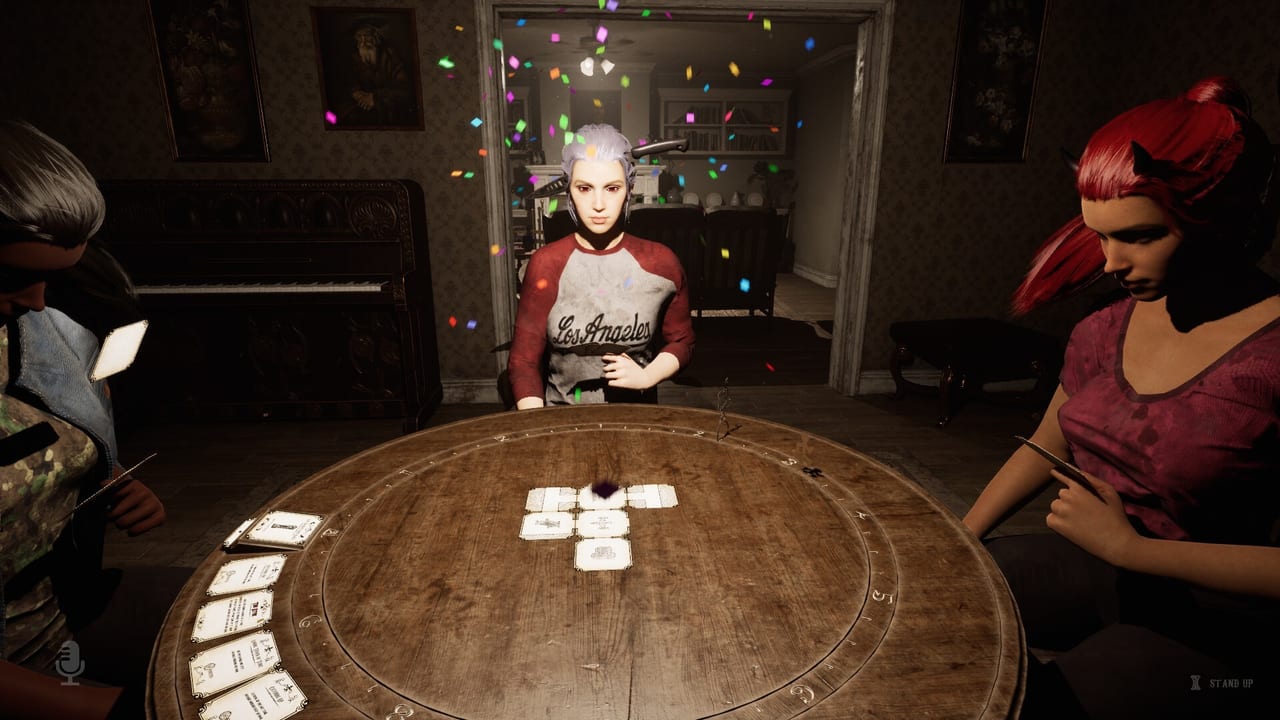
the cabin game is built for 1–4 players. Twisted Corridor shipped solo and online co-op on Steam Windows when the title entered Early Access on 27 August 2026. There is no local split-screen. You host or join over the network, sit at the same round table, and live or die on the same clock/track. English is the only interface and full audio; localization is planned. The $11.99 USD price is meant to stay that price after Early Access. Twisted Corridor is targeting a 6–8 month Early Access window.
Co-op is not four copies of a solo run in one lobby. Everyone’s card choices rewrite the same cabin. A Room Card you play becomes terrain someone else has to flee through. An Event Card you greed becomes a minigame the whole table has to survive. The store copy is honest about the social contract: whether you carry or get carried, choices impact one another. When the final hour lands, you choose to escape together, die together, or every player for themselves.
Who can play together
Invite from the Steam lobby. 2, 3, or 4 players share the deck, the pawns, and the floor plan. One player can still finish a run alone if the lobby empties, but this page assumes you meant to cooperate. Voice chat exists; use the in-game voice icon instead of hoping people read the notebook from another room. Controls covers sit, STAND UP, M for tips, and the comfort sliders that keep a four-person session from melting.
Candy spends at The Boo Factory on cosmetics, lobby pets, and tricks ‘n treats. Treats are there to mess with friends. That is a late-night tool, not a learning-run tool. If the group has not identified an escape room yet, do not drop a trick on the person holding the notebook. You will convert a teachable loss into a rage quit and still be on the same monster pawn.
Assign jobs at the table
The round table is a shared HUD. A clock/track holds the player pawn and the monster pawn. The run ends if the clock hits 12 or if the monster marker catches the player marker — unless you have already entered the correct escape room. Somebody has to watch those pawns while other people are face-first in The Cellar.
A stable four-player split:
- One table caller sits, tracks the clock, calls Lifesaver timing, and reads M tips if the group is stuck.
- Two searchers STAND UP after Investigation Cards and cover assigned rooms.
- One floater places Room Cards, keeps connections honest, and rotates into a chase if an Event Card lands far from the searchers.
Three-player tables collapse the floater into the caller. Two-player tables are a caller-searcher pair that swap when the seated player needs a break. Solo is both jobs; that is why solo reports too many time-skip cards and two-hour runs. Do not all four stand up into The Living Room because a sofa looked suspicious. If nobody is at the table, the monster pawn is a silent fail state.
Press M. The tip layer is easy to skip when four people are talking. Put it on the caller’s job list.
Clue hunting as a team
Investigation is Phasmophobia-shaped: evidence appears in rooms depending on whether objects exist. A grandfather clock, a fridge, barrels, ranch tools, a shed hook — presence and absence both go in the notebook. One person should own that notebook. The others radio findings. If four people keep four mental logs, you will commit to four different exits at 11:40.
Build the cabin before you flood it with bodies. Room Cards must connect; a loop or corridor helps later events. Known rooms include The Cellar, The Living Room, The Kitchen, The Farmer’s Ranch, The Garden Shed, and hallways. Place for search routes, not for screenshots. Room layout is the dedicated page; the co-op version of the rule is “can two people pass without sharing a doorway when a monkey is in the hall?”
Then spam investigation. Stalling feels cooperative because nobody has died yet. Event Cards do not respect that feeling. They can spawn a threat across the map, including on the player who was “just checking the Ranch.” The identification method is on Clues. The commit-and-run is on How to Escape.
Tricks ‘n treats: don’t grief the run
The Boo Factory is funny until it is not. Tricks that startle, blind, or displace a teammate during Cutting Corner, Sick of Being Dead, or an Attic Stalker chase are how you donate Progress to the monster pawn. Save treats for a lobby that has already escaped once and asked for chaos. Candy cosmetics do not change evidence. They do not push the monster marker back. Lifesaver Cards do that. Spend the deck on the clock, not on the friend who is flushing pills before a stomach churns.
If someone is new, they are in a carry. The store text already framed it: carry or get carried. Teach sit/stand, M, and the notebook before you teach trolling. A carried player who learns to call the clock is worth more than a veteran who hides in The Garden Shed with a treat bound.
Carry, get carried, or split
Skill gaps are expected in Early Access. The person who understands card types should take Room Cards and Investigation priority. The person with a stable frame rate should take chases — Neighbour darkness has crashed some clients, and musical rooms still ask for clean movement even after popcorn-ball and monkey-collision fixes. The person who gets motion sick should stay table caller. That is not a hierarchy. It is how four bodies share one fail state.
Do not grief the carried player with extra Event Cards “for content.” Losing a minigame pulls the ghost closer. Winning often has no reward. You are not farming; you are burning the identification window. If the group wants spectacle, do it after the notebook names a room.
The final hour
When the pawns are close and the clock is loud, decide the social ending before someone panics into the wrong doorway. The design offers three postures:
- Escape together: path as a group to the identified room. Correct room still required. A nearby Kitchen will not save you if the evidence named The Living Room.
- Die together: you misidentified, or the monster pawn won, and you stop pretending a split save is coming.
- Every player for themselves: valid, and it will strand the person who stayed to call the clock. Say it out loud if that is the plan so the caller can stand up.
When the ghost catches you in 3D space, entering the correct room is the escape. Call the room name on voice. Repeat it. Do not say “this way” while running toward a dead-end Cellar you placed at 2 o’clock.
The First Round Patch gave you a clock audio slider, slower chases, a more forgiving Attic Stalker, droppable totems, unstuck AI, and a maybe-fix for the end-game forest teleport. Use the breathing room to stay on voice, not to argue about treats. Patch history is on the Updates Hub. Monster pages for the things you will actually meet are on the Monsters Hub, including Attic Stalker and Neighbour.
Play remains on the Steam store. Feedback belongs on the official Discord. This wiki is unofficial, and four people shouting over a bad layout will still lose even if they bookmarked every guide.
Frequently Asked Questions
Quick answers about cards, clues, monsters, and escaping the cabin.
How many players does the cabin game support?
1–4 players, solo or online co-op, on Steam Windows. There is no local split-screen. Getting Started covers the first session either way.
What jobs should we assign?
Keep one player on the table clock and monster pawn. Send the others to search assigned rooms after Investigation Cards. Layout that makes that split possible is on room layout.
Should we use tricks 'n treats on teammates?
Not on a learning run. Treats exist to mess with friends and will throw event minigames. Spend Lifesaver Cards on the pawn track instead.
What does the final hour actually mean?
You choose to escape together, die together, or every player for themselves. The exit is still the correct room identified from clues, not whichever doorway is closest.
Can one good player carry the lobby?
Yes, and the game expects that some people will get carried. The carrier should own Room Cards, investigation priority, and the notebook — not extra Event Cards for spectacle.
Do we need voice chat?
Strongly yes. In-game voice exists. The table caller has to name pawn movement and the escape room while searchers are in hallways. Controls shows the sit/stand split that makes that call possible.