
Event Cards in the cabin game
Danger versus readability for minigames players can actually describe. Not an official complete list.
Event cards are the cabin game’s variety engine. You play one, the table goes quiet, and a minigame occupies the rooms you already built. This page ranks known events by two axes: how likely they are to wipe a run, and how readable the card is the first time you see it. It is not a complete official list. Early Access currently ships 30+ cards and the event pool is still growing. If a title is missing here, it is missing because public notes and player reports have not described it cleanly — not because it is weak.
Pair this ranking with the type rules on card types and the geometry rules on room layout. A “manageable” event in a looped hallway is a wipe in a dead-end cellar. Practical survival steps live in survive events. Threat bios live under the Monsters Hub.
How this ranking works
Danger is about wipes, crashes, and chases that ignore a bad floor plan. Readability is about whether the card text or animation tells you the rule before you die. A riddle you can follow is cheaper than a darkness event that also crashes the client. This is still the Cards Hub idea of priority, not a PvP tier.
After any patch, re-check patch notes. The First Round notes already changed attic chase forgiveness, totem dropping, popcorn balls, and monkey collision. Rankings below assume that patch is in the build you are playing.
High danger, messy readability
Neighbour. The lights go out. Some players report a crash when the cabin goes dark. When the event does resolve, a suited, screaming figure waits in a storage room of boxes. Darkness plus a possible hard crash is why Neighbour sits at the top of this list: you can lose the run to a client quit, not to a readable fail state. Lower settings before a Neighbour lobby if your machine already hitching, and file the crash on Discord. Full workaround notes: Neighbour and settings.
Attic stalker. Totems plus a chase in a tight vertical space. Reviews call the attic anxiety-inducing even when you know the rule. A First Round patch made running away more forgiving and fixed totems that could not be dropped. That patch moved attic down in raw unfairness and up in readability, but the room still punishes groups who never built a loop. Do not confuse this chase with the child’s-room toy-box screenshot — that is a separate trap. Write-up: Attic stalker.
High danger, readable after one clear
Musical rooms plus the giant monkey. Music fills rooms you placed earlier; a huge monkey then occupies the cabin. Collision used to feel inconsistent. The First Round patch called out popcorn balls and monkey collision, which is why this event is now more of a learned chase than a random clip-through. You still want looped hallways. A single-door Kitchen is a gift to the monkey, not a hiding spot. See the monster roster for the body, and room layout for the kite path.
Spike / slat chase. Wooden slats and spike geometry turn a badly connected wing into a blender. The rule is readable once you have seen the slats: do not get pinned in a room with one door. Danger stays high because the cabin you built at 2 o’clock is the arena at 10 o’clock.
Cutting Corner. Wait for the man to turn. The rule is on the encounter: peeking or rushing is the fail. Groups wipe this one by treating it like a sprint. If you can sit still until he turns, readability is actually good. Danger is still real because one impatient teammate fails the room for everyone.
Medium danger, riddle-readable
SICK OF BEING DEAD. The card is a recipe, not a jump scare. The printed text tells you she is cold, her vomit burns, you must find the medicine before her stomach churns, and you must flush the pills down the drain to clear the migraine. Read it out loud. Split the search: one player hunts medicine, one stays ready at a drain. This event punishes groups who skip the text, not groups who follow it. That is why it sits below Neighbour and attic even though the tableau looks grim.
PARANORMAL ALTERATION. The title is in the Early Access deck — players hold the card at the table, chair art and all. Public notes have not given a clean, complete minigame script the way SICK OF BEING DEAD has a printed recipe. Treat it as an event you respect, not one this wiki will invent rules for. After you survive it once, add your own line to the clue notebook and come back here when the community description is stable.
Set-pieces that look like events
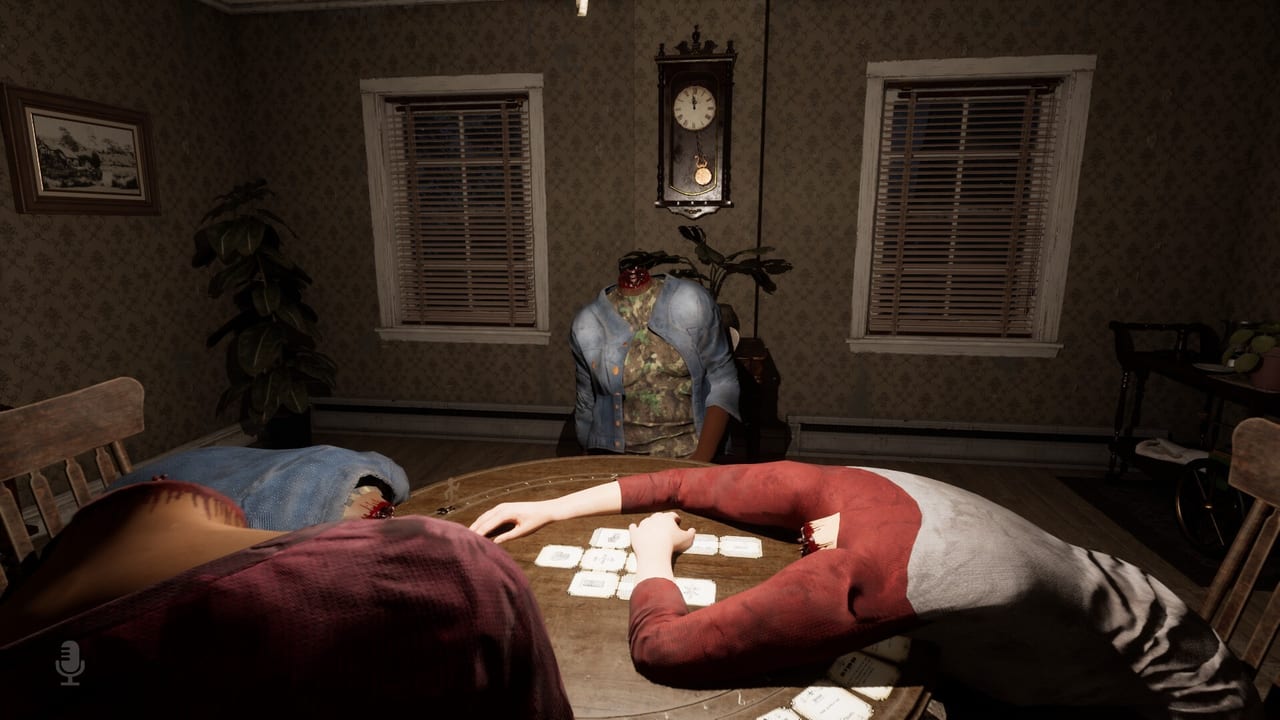
Headless table. Three headless bodies around a card table, wall clock on 12, cards still dealt. This is a set-piece more than a named AI with a health bar. It is listed with monsters because that is how it presents, but it is not a “counter-pick.” Do not stall investigation because the tableau is ugly. Look, log, leave. Roster context: monster roster.
Child’s-room toy-box. A wheeled toy box in a child’s bedroom can swallow a body. This is not the attic stalker. File it as its own child’s-room trap so you do not bring attic totem habits into the wrong room. The attic page calls out the mix-up on purpose.
Hallway gaunt (“Welcome to Reality”). The emaciated figure in the corridor with the painted wall is a monster presentation that can ride on top of movement through hallways you placed. Connect those hallways. Details: Monsters Hub.
How to spend an event card on purpose
Follow the same shopping list as the Cards Hub:
- If you do not have a connected cabin, play a room, not an unread event.
- If you do not have evidence, play investigation, not an unread event.
- If the monster pawn is one sector away, play a lifesaver, not an unread event.
- If the event is one you already understand, and the floor plan has a loop, then you can afford the minigame.
Never spend a time-skip to “get past” an event you fear. Time-skips inflate solo length and do not teach you the minigame. You will draw that event again on a later shuffle.
After the minigame
Sit down. Check both pawns on the clock track. Write one sentence in the clue notebook. If someone died or crashed, decide whether you reset or continue before the next card hits the table. Then go back to naming the escape with clues and how to escape.
New groups should still run getting started before they treat this ranking as law. Early Access on 27 August 2026 is young; Early Access will keep adding events. This page will stay a danger/readability list of known cards, not a fake complete catalog.
Frequently Asked Questions
Quick answers about cards, clues, monsters, and escaping the cabin.
Is this every event card in the game?
No. Early Access has 30+ cards and the event pool is still growing. This page only ranks events players can describe from public notes and reports. Missing a title does not mean the card is weak or unused.
Which event should I fear first?
Neighbour, because darkness plus crash reports can end a run outside the rules. Attic stalker and the musical-rooms monkey are the next chase threats. Cutting Corner is dangerous only if someone refuses to wait for the man to turn.
Did the First Round patch change events?
Yes. Attic chase is more forgiving when you run, totems can be dropped, and the monkey notes call out popcorn balls plus collision. Read patch notes before you reuse old event habits.
Is the toy-box the attic stalker?
No. The toy-box is a separate child's-room trap. Attic stalker is a totem-and-chase encounter. Mixing them up is how groups bring the wrong plan into the wrong room. See Attic stalker.
What do I do after surviving an event?
Check the clock pawns, log a line in the clue notebook, and return to investigation. Events do not name the escape room. How to escape and clues still decide the win.