
Card Types in the cabin game
Six jobs on one table: build rooms, spawn events, hunt clues, shove pawns, or skip time.
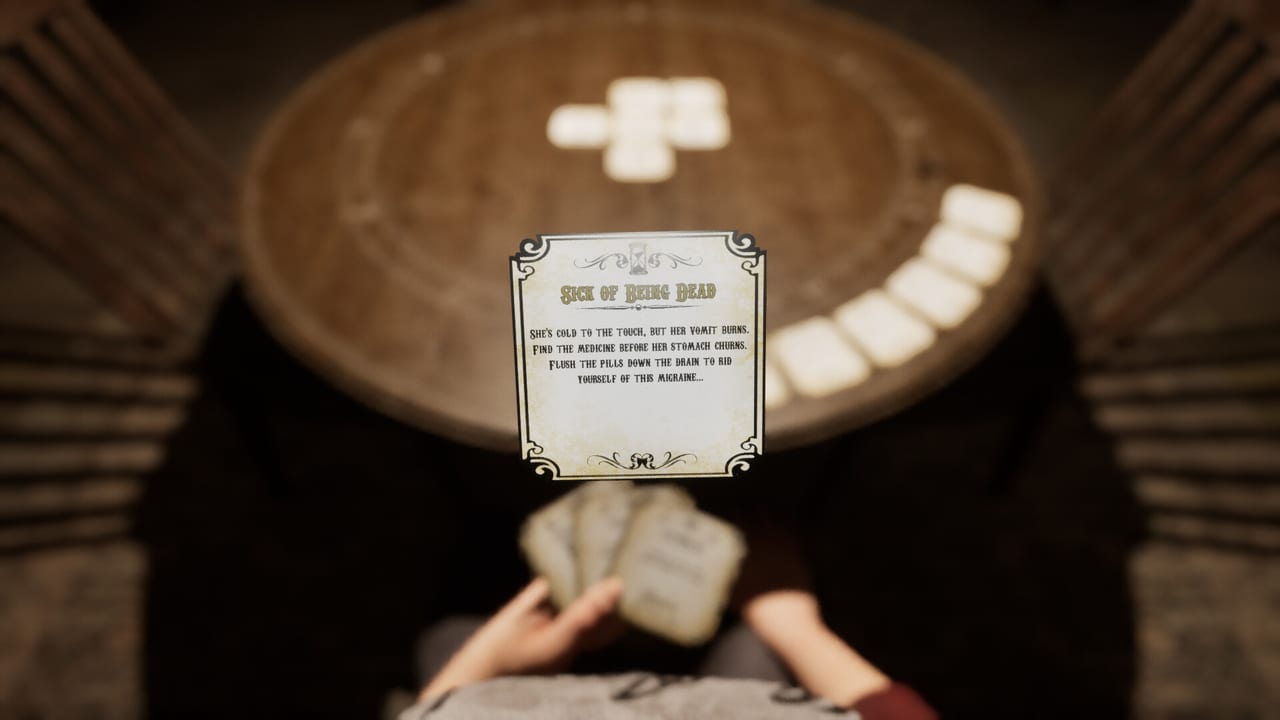
Every card in the cabin game does one of a handful of jobs. The Early Access deck is 30+ cards, shuffled at the start of each run, so you will not see the same mix twice. What stays stable is the job list. If you can name the type in your hand before you slam it, you can follow the Cards Hub priority without memorizing every title.
This page is the type encyclopedia. For danger rankings of specific minigames, jump to event cards. For how room cards should actually touch, jump to room layout. For the things that chase you after an event resolves, use the Monsters Hub.
Press M on a confusing card. Twisted Corridor put a tip overlay in the build; reading flavor twice while the clock track moves is how solo runs die.
Room cards — they BUILD the cabin
Room cards are the floor plan. You place them in the center of the table as a connected cabin. They are player-designed: the group chooses orientation and adjacency, but doors have to line up. A pretty spread that leaves The Cellar hanging off a single hallway is still a legal cabin, and it will punish you later.
Rooms players keep naming in Early Access:
- The Cellar — barrels on the card art; a natural dead-end if you only give it one hallway.
- The Living Room — sofa art; often sits near the table’s “home” feeling, which does not make it the escape.
- The Kitchen — fridge art; a workroom, not automatically safe.
- The Farmer’s Ranch — crossed wrenches; a chunky wing that wants two connections if you can spare them.
- The Garden Shed — a side building that is easy to tuck away and then forget during a chase.
- Hallways — L-shaped connectors. These are the difference between a loop you can kite and a corridor you die in.
The cabin has no one-size map. Early placement has late consequences: event minigames and monster chases spawn inside the geometry you already committed to. If you only remember one layout rule, remember connect everything, then close a loop. Details and late-game failure modes live on the room layout page.
Event cards — they spawn minigames
Event cards yank the group out of quiet table talk and into a first-person encounter. They are the variety engine. Known titles include SICK OF BEING DEAD (find medicine, then flush the pills), PARANORMAL ALTERATION, Neighbour, Cutting Corner, musical rooms with the giant monkey, and Attic stalker. That list is not a complete official checklist. The event cards page ranks the ones players can describe by danger and readability.
When an event hits, one player should still glance at the clock pawns. A perfect minigame that lets the monster marker catch you is still a wipe. Survival habits belong in survive events.
Investigation cards — they spawn evidence
Investigation is how you name the escape. Playing one of these cards seeds the cabin with evidence you then hunt on foot, in the same broad spirit as a Phasmophobia evidence sweep: walk the rooms, look for what does not belong, and write it down. Investigation does not shove the monster pawn by itself. It buys information. Without it, you can survive every chase and still fail at 12 o’clock because you never proved which room is the exit.
Treat investigation as the default spend when the monster pawn is not about to tag you. Log findings in the clue notebook and cross-check clues. The how to escape guide is the place that turns a pile of evidence into an actual door.
Lifesaver cards — they push the monster away
Lifesavers shove the monster pawn backward on the clock track. They do not identify the exit, they do not build rooms, and they do not complete events. They buy minutes. Play them when the monster marker is about to catch the player pawn, or when a chase is about to start with no loop to run. Playing a lifesaver “because we might need space later” at 2 o’clock is how groups reach 11 o’clock with empty hands.
Hold at least one if the table will let you. In four-player co-op you can stagger who banks the saver. In solo, the saver is often the only brake you have.
Progress cards — they move the monster
Progress cards are the tax for touching the deck. They move the monster pawn forward along the rim. Some progress is bundled into other plays; some is a card you must resolve to keep the hand flowing. Either way, progress is how the hunt keeps pace with your investigation. You cannot freeze the monster by refusing to play. You can only outrun it with evidence, rooms, and the occasional lifesaver.
If a progress card is the only thing you can legally play, play it, then immediately look for an investigation or a connecting hallway on the next hand. Do not chain progress “to see what happens.” What happens is 12.
Time-skip cards — they inflate the clock, especially solo
Time-skips jump the clock. They feel like a shortcut past a boring hour. In practice they inflate solo length by burning clock without adding rooms or evidence. A four-player lobby can sometimes skip a dead hour because four brains are already holding clues. A solo player who skips time is volunteering to meet the monster with a thinner notebook.
Put time-skips at the bottom of the Cards Hub priority. If the card is the only play and the monster pawn is far, still ask whether an unused investigation is sitting in someone else’s hand.
How the types collide on one turn
A healthy turn looks like this: play a room that closes a loop or an investigation that seeds evidence; stand up if the cabin changed; sit down; only then consider events you understand. An unhealthy turn looks like this: time-skip, unread event, progress, and a room that creates a new dead-end. The table will feel busy. The notebook will be empty.
Candy at the Boo Factory is not a card type. Cosmetics, lobby pets, and tricks ‘n treats happen before you sit down. They do not shove pawns.
When a patch rewires an event — popcorn balls and monkey collision already moved in the First Round notes — re-read patch notes and Early Access before you reuse old type assumptions. New players should still start from getting started. The types do not change as fast as the event list, but the cost of mixing them up is the whole run.
Frequently Asked Questions
Quick answers about cards, clues, monsters, and escaping the cabin.
What are the main card types?
Room cards build a connected cabin. Event cards spawn minigames. Investigation cards seed Phasmophobia-style evidence. Lifesavers push the monster pawn away. Progress cards move that pawn toward you. Time-skips jump the clock and tend to inflate solo length.
Do I have to play a card every turn?
You play the hand you are dealt; refusing every spend does not freeze the hunt. Progress still happens as the table advances. If a progress card is the only legal play, resolve it, then get back to investigation and connecting rooms.
Is a lifesaver better than an investigation card?
Only when the monster pawn is about to catch you. Investigation names the escape. A lifesaver only buys minutes. Park savers for a pinch; spend investigation while you still have hallway to walk.
Where should I go after this page?
Rank specific minigames on event cards, then fix your floor plan on room layout. Threats live under Monsters Hub. New players should still open getting started.