
the cabin game The Cellar: Your First Room and Your Fallback Position
The only room that exists before you build anything else, and where eliminated players watch the rest of the run.
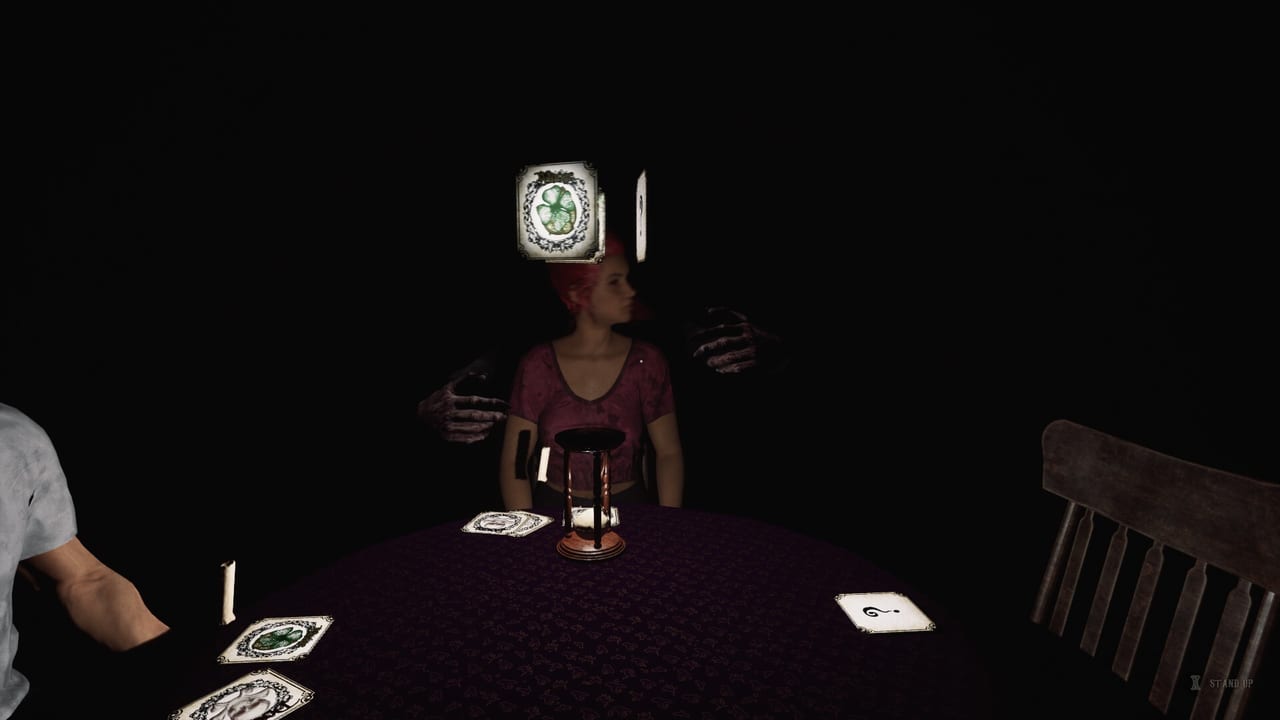
The Cellar is the one fixed point in a cabin game that otherwise builds itself from shuffled cards. Every run begins with The Cellar already on the table. You do not choose it, you do not draw it, and you cannot rotate it away. It arrives as the anchor of the floor plan, and it earns that privilege twice: once as the starting room, and again as the place where eliminated players watch the rest of an Event unfold.
Twisted Corridor’s Early Access build entered Steam on 27 August 2026. The Cellar is the same in solo and in a four-player lobby. Understanding what it does — and what it cannot do — shapes how you place the three doorways it leaves open for the rest of the cabin.
Why The Cellar is always first
The game designs The Cellar as the literal and mechanical centre of the starting state. When you sit at the round table for the first time, The Cellar card is already in the centre of the layout. It has one doorway facing outward, and three more doorways on its other three sides where your first Room Cards will connect.
Because The Cellar has only one exit, it cannot expand further on its own. The cabin does not grow through The Cellar. It grows away from it. The three remaining doorways are the three directions the floor plan can develop. Players who understand this quickly learn to read The Cellar as the hub of a wheel, not as a destination.
The Cellar contains barrels. Those barrels are objects. In the investigation system, absence is data, but presence is also data. If a clue card references The Cellar or its contents, those barrels become searchable evidence. Players who never walk into The Cellar after the opening placement miss a potential source of confirmed information.
The Cellar as a spectate location
When a player is eliminated during an Event, they do not leave the run. They are sent to The Cellar, where they can watch the remaining players continue. This is a deliberate design choice: elimination during an Event is individual, not group-ending. The other players can still complete the run.
The cost is real. Every player eliminated during an Event adds one hour to the shared clock. One eliminated player is plus one hour. Three eliminated players is plus three hours. In a game where the clock is already the primary fail state, sending multiple players to The Cellar mid-run can accelerate the final approach to midnight faster than almost any Progress Card.
The Cellar is not a safe room in the conventional sense. It does not protect you from the monster pawn on the clock track. It does not pause the investigation. It is a spectator box with barrels, and the only exit from it is the same door the Event used to send you there.
What The Cellar cannot do
The Cellar has one doorway. This is a constraint, not a flavour note. If Event Cards or room placement forces you to path through The Cellar during a chase, that single doorway is the only way out. A dead-end Cellar is a corner in a horror game. Groups that treat it as a staging area rather than an exit risk finding that the one door they counted on is already occupied.
The Cellar is also not a hiding spot. It is where eliminated players land. If you are still active and you retreat to The Cellar during an Event, you are in the space where others have already failed. That context matters more than the room’s geometry.
Strategy implications
The Cellar’s single doorway and its role as the spectate hub create two distinct strategic notes:
First, do not build a cabin that funnels critical paths through The Cellar. The three open doorways exist so the floor plan can develop in multiple directions. A layout that forces every chase to cut through The Cellar’s one-door constraint is a layout that created its own bottleneck.
Second, treat The Cellar visit from elimination as a warning, not a break. Watching from the cellar while the clock advances is better than being fully eliminated, but it is not neutral. Each hour added to the track is an hour the remaining players have less margin.
For the table rules that govern turns and card play, see Table Rules. For how Event Cards interact with player count and clock, see Survive Events.
Frequently Asked Questions
Quick answers about cards, clues, monsters, and escaping the cabin.
Is The Cellar always placed first?
Yes. The Cellar is the fixed starting room in every run. You do not draw it or choose it. It arrives in the centre of the table and provides the three open doorways from which the rest of the cabin grows.
What happens when I am eliminated during an Event?
You are sent to The Cellar, where you can spectate the remaining players. Elimination adds one hour to the shared clock per player eliminated. The run continues without you until either the remaining players escape or the Visitor catches the group.
Can The Cellar be used as a hiding spot?
Not effectively. It has one doorway, which makes it a dead end rather than a hiding space. Its actual role is as the spectate zone for eliminated players, not as a safe room for active ones.
Do objects in The Cellar matter for investigation?
Yes. The Cellar contains barrels that function as searchable objects. If a clue references The Cellar or its contents, those barrels can serve as investigation evidence just like a grandfather clock in The Living Room or a fridge in The Kitchen.
How does The Cellar affect room placement?
The Cellar has three open doorways that define the initial directions the cabin can expand. Groups that treat these as equal options often build more flexible layouts than groups that tunnel through The Cellar to reach distant wings.