
Top Tips the Cabin Game Still Hides
Press M, sit at the table, build a loop, log clues, and watch both pawns before you slam an event.
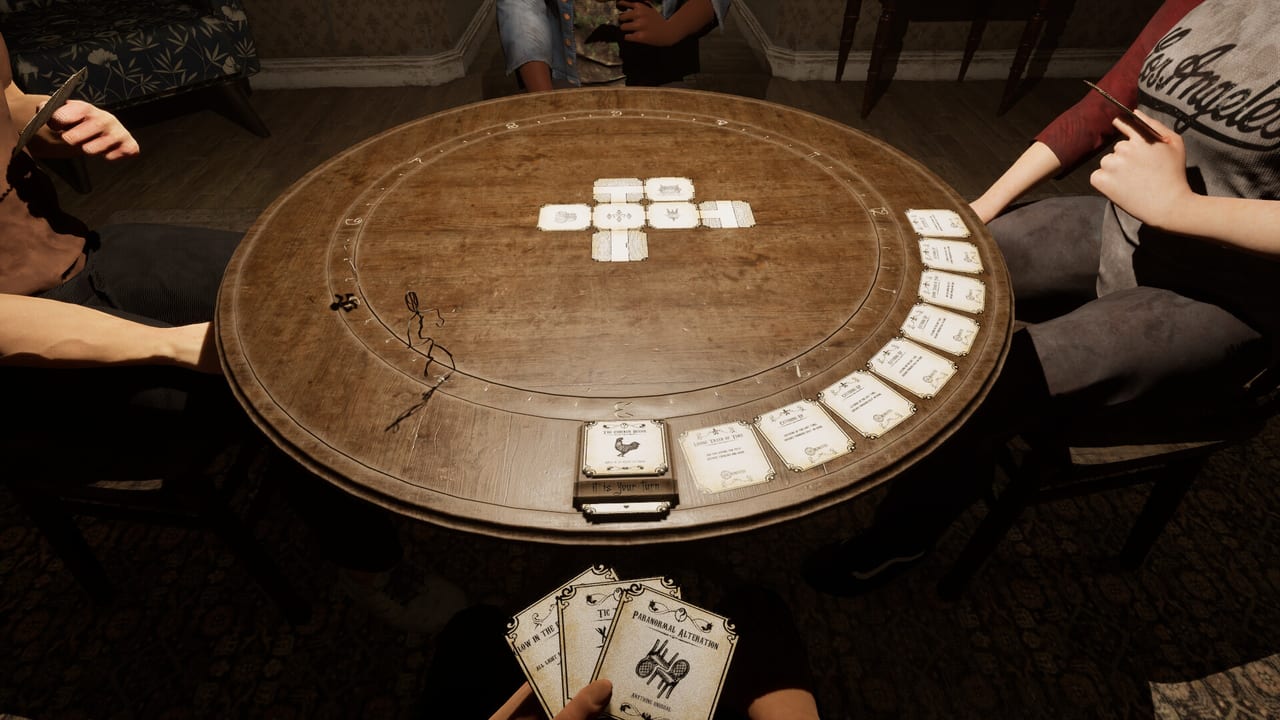
the cabin game is in Steam Early Access as of 27 August 2026. Twisted Corridor has said core mechanics and the game loop may change from player feedback, and a real in-game tutorial is still being conceptualized. That is why most first-night wipes are not monster problems — they are tip problems. This page collects the small habits the community keeps naming on Steam reviews, Discord, and YouTube clips. Read it before a 1–4 player night, then go back to getting started once the basics click.
If you only have two minutes, learn these five: press M, sit at the table, build a loop, log presence and absence, and watch both pawns. The rest of this page is the why and the when.
Press M before you guess
Press M in-game. It opens the tip overlay that explains what an Event Card wants, what a card family does, and where the clock is on the rim. A large share of first-run confusion is players who never opened that overlay. The 2nd wave of bug fixes (29 August 2026) added more tips and asked you to reread the ones you skipped. Press M even if you escaped once.
When to press M:
- The card text is unclear about what you have to do.
- An Event Card starts and you do not recognize the objective.
- The room art looks like a kitchen but the cabin says it is a hallway.
- You want to know whether the clock or the monster pawn is the bigger threat this turn.
M is not a substitute for the clue notebook or the clues guide. It is a faster way to read the live card without restarting the minigame.
Sit at the table; do not stand up until you have to
A turn is sit, play, then STAND UP to walk the cabin. Sitting is information. You can see the hand, the clock, and the monster pawn on the rim. Standing is verification. You search a room or survive an event. If everyone stands up, nobody is watching the rim. That is how groups lose to a silent pawn catch they never saw.
In co-op, assign one table caller who stays seated while others STAND UP. Job splits live on co-op. The legal version of sit/stand is on table rules. First Round made it so you can rotate the camera while sitting, so a tell behind you is still a tell.
Solo players cannot split. Bounce: play, stand, search, sit, play. Sitting is the moment you check both pawns. Treat that glance as the rim tax.
Build a loop, not a tower of pretty rooms
Room cards BUILD the cabin. Doors must connect. A loop of hallways is the difference between kiting a chase and dying in a one-door Cellar. The First Round patch made Attic stalker more forgiving and removed monkey collision in narrow halls, but neither fix creates a second door you never placed.
Practical order for a new run:
- Place two rooms that already share a door (Living Room + Kitchen is a common start).
- Spend the first hallway on a loop seed, not a new wing.
- Park The Cellar and The Garden Shed only after they have two potential connections.
- Stop expanding when the walkable graph is a ring with short spurs. Extra rooms past that point are extra event stages.
Layout details and late-game consequences are on room layout.
Log presence AND absence in the notebook
Investigation is closer to a Phasmophobia evidence sweep than to a key hunt. A clue that mentions a grandfather clock only resolves if a grandfather clock actually exists in the cabin you built. Presence and absence are both data. A room where you looked and did not find the object is a fact that knocks candidate escape rooms out.
Use the four-field log on the clue notebook page: room, object, card or trigger, witness. Empty notebooks are how groups guess The Living Room at 11:50 and wipe. The Cabin itself is not a hint. It is a board you built, so the objects you placed are the only objects that exist.
The investigation system is unpacked on clues. The commit and run is on how to escape.
Watch both pawns every sit
Two fail states live on the table. The clock hits 12, or the monster marker catches the player marker. The First Round patch added a separate audio slider for the clock so you can think while the tick is still audible, but a quiet clock does not slow the rim. Audio is not a substitute for vision. Check both pawns every time you sit down.
Progress cards shove the monster marker toward you. Lifesaver cards shove it back. Time-skip cards jump the clock, not the marker. Mixing those three is how solo runs end at 12 with an empty notebook. Time-skip cards inflate solo length without adding evidence. Spend the hand on a hallway or an Investigation Card instead.
Spend the deck for the run, not for content
Event Cards yank you out of quiet table talk and into a minigame. A win often has no reward. Losing pulls the ghost closer on the clock track. That asymmetry is design, not a missing loot table. Greeding unread Event Cards on a blank notebook is the most common night-ending mistake Early Access groups keep naming.
Practical order: rooms → investigation → events you understand → lifesavers in a pinch → time-skips last (especially solo). That is the Cards Hub priority in one sentence. Treat events as taxes. Survive them fast, then sit, log a line, and return to the notebook.
Survive events, do not “beat” them
Event minigames in Early Access are poorly explained. Press M when one starts. Do not import a habit from a different event:
- Attic stalker — drop totems when asked, run when chased (First Round made running more forgiving).
- Giant monkey — musical rooms, popcorn balls, no more hallway pins after First Round.
- Neighbour — darkness plus possible client crash. Lower settings before a known-unstable lobby.
- Cutting Corner — wait for the man to turn. Do not rush the doorway.
- SICK OF BEING DEAD — find medicine, flush the pills down a drain. It is a search, not a fight.
- Feeling Small — hold the toy. The 2nd wave fixed the bug where it vanished from your hand.
- The Knight — long event the 2nd wave shortened; still a clock tax.
If a card is not on this list, that does not mean it is weak. It means the wiki will not invent a script for an event players have not yet described cleanly. Trust the live card over a clip from the opening days.
Candy is for chaos, not for the run
The Boo Factory sells cosmetics, lobby pets, and tricks ‘n treats for candy earned in session. Treats are there to mess with friends. They will not shove the monster pawn, identify the escape room, or raise your frame rate. On a learning run, do not drop a treat on the person holding the notebook or the runner in an attic chase. Save grief for a lobby that has already escaped once and asked for chaos.
If you are new, you are in a carry. Teach sit/stand, M, and the notebook before you teach trolling. A carried player who learns to call the clock is worth more than a veteran with a treat bound in The Garden Shed.
Connect on one build, verify files before you host
If a friend cannot start their turn, verify game files. A version mismatch was causing that freeze. The Optimization Update (30 August 2026) added a version mismatch check so mixed builds cannot sit together. If a join code claims it failed, look at whether you are already in the session; that false fail was also fixed. Full connection steps are on hosting and join codes.
Lower graphics, raise your chance of a clean run
The Optimization Update was “mostly about pushing some big changes for optimization.” It does not replace the Early Access recipe: Low graphics, VSync off, FPS cap on, clock slider polite, sitting camera verified. Settings collects the whole list and explains why each knob matters. Strobes are a separate issue — the Steam page warns about photosensitivity and this wiki will not invent a hidden “disable all strobes” checkbox.
When you are ready to leave, go to the correct room
The win condition on how to escape is brutal and short. Identify the correct escape room from investigation evidence, then enter it before 12 o’clock and before the monster marker catches you. When the ghost catches you in 3D space, that same correct room is still the escape. Sprinting into The Cellar because it is nearby will not save you if The Cellar is not the identified exit.
The store copy is honest about the final hour: escape together, die together, or every player for themselves. The correct room is the correct room. Coordination does not override evidence.
A short list of small wins
- Press M before you read a card out loud.
- Keep one player at the table in co-op.
- Place connecting rooms, not pretty dead ends.
- Log presence and absence, not vibes.
- Hold a lifesaver for the actual pinch.
- Save treats for a lobby that asked for chaos.
- Verify files when turns will not start.
- Lower graphics, then lower graphics again.
- Enter the correct room, not the nearest closet.
If you only remember one of those, remember press M, sit, and watch both pawns. The rest of this wiki is those three habits under pressure.
Frequently Asked Questions
Quick answers about cards, clues, monsters, and escaping the cabin.
What is the single most important tip for first runs?
Press M in-game for the tip overlay, sit at the table to watch the clock pawns, and STAND UP only when a card asks you to walk the cabin. That one habit clears half of the wipe reports.
Why do groups lose in the first nights?
Because nobody watches both pawns while everyone else is in a hallway. The clock hits 12 or the monster marker catches you while you are admiring a sofa. Assign a table caller in co-op; bounce sit/stand in solo.
Should I spend a time-skip card when stuck?
Only after you have logged every object in the current room and one adjacent room. Time-skips inflate solo length and do not create evidence. Read progress cards and the solo note.
Why does everyone say press M?
The tip overlay explains Event Card objectives, card families, and the clock position. The 2nd wave added more tips and asked you to reread the ones you skipped. M is faster than restarting a minigame.
Are tricks 'n' treats useful during a run?
No. They mess with friends, not with the clock. Save them for a lobby that has already escaped once. The Boo Factory page is blunt about that.
Where should I go after this page?
Getting Started for the first hour, clues for the notebook, how to escape for the commit, co-op if four bodies share the clock, solo if it is just you.