
the cabin game Clue Types and How to Identify Them
Grandfather Clock, Past Player, Corrupt Painting, and more — verified types from current Early Access.
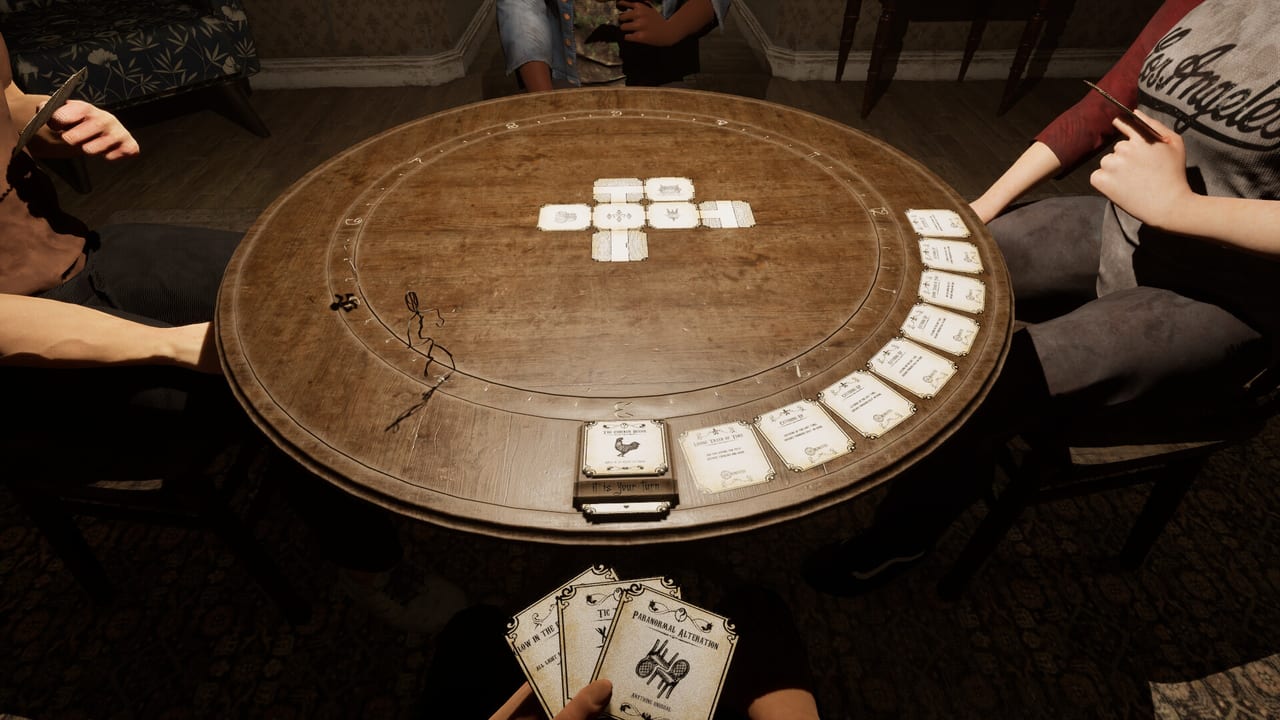
The cabin game does not hand you the exit room. It hands you clues that name themselves when they appear inside the rooms you built, and you have to match those clue identities to a three-clue combination that unlocks the correct door. This page is the field guide for every clue type players have documented from the current Early Access build. It is not an official complete list — Twisted Corridor has not published the full roster — but the types below are drawn from gameplay reports, community Discord notes, and the grindnstrat beginner guide, all verified against current-build behaviour.
Use this page alongside Clues for the investigation method, the clue notebook for logging, and How to Escape for turning six identified clues into one correct room. The walkthrough covers the full run order.
the cabin game entered Early Access on 27 August 2026. 1–4 players, solo or online co-op, Steam Windows, $11.99 USD, 30+ cards, 12 monsters, English-only in-game with localization planned. Press M for in-game tips — some clues have audio cues that are easy to miss.
How clue types fit into the run
Every clue type has a specific identity that appears in-game when Investigation Cards seed it into the cabin. You do not choose which clue type fires; the Investigation Card does. Your job is to walk the rooms, notice what changed, record the clue in your Discovered Clues page (press M), and keep narrowing toward the three that match one of the exit room combinations.
Six confirmed clue types are documented in the current build:
- Grandfather Clock
- Past Player
- Corrupt Painting
- Paranormal Alteration
- Chicken Decor
- Tic Tac Toe
A seventh type may exist based on community reports, but the description is not yet clean enough to include without inventing details. Log what you see and check back after future patches.
Grandfather Clock
The Grandfather Clock clue is one of the most straightforward. When it activates, you will hear the clock strike — a distinct audio cue that cuts through the ambient horror sound. Walk the rooms and listen for it. It is not subtle.
Visually, a grandfather clock or clock-like object appears or changes in one of the rooms you built. The sound is the primary indicator; the visual is the confirmation. Once you hear it, open the Discovered Clues page (press M) and record Grandfather Clock as active.
This clue is worth noting early because its audio signature makes it hard to miss — unlike Paranormal Alteration which can hide in furniture you stopped looking at.
Past Player
The Past Player clue takes multiple forms. It can appear as written text on a wall, a body part visible in a corner, skeletal remains, or other strange evidence left by whoever was here before you. The common thread is something human or formerly human that does not belong in a normal room.
When searching for Past Player, pay attention to anything that looks out of place. A wall that should be blank has writing. A room that should be empty has a shape in it. Do not dismiss it as set dressing — in this game, set dressing is evidence.
Record what form the clue took in the Discovered Clues page. The clue identity is “Past Player,” not the specific room or object you found it in.
Corrupt Painting
The Corrupt Painting clue changes one of the portraits or paintings in the cabin. A normal-looking painting suddenly shows something more ominous — the art itself has been altered by whatever is in the house.
If this clue is active, inspect the paintings and portraits around the cabin carefully during your search phase. The altered painting may not immediately stand out if you are rushing through the rooms or if you already walked past it before the clue activated.
This is one of the easier clues to miss if you are not methodically checking wall art. A slow lap through connected rooms with your lantern helps catch Corrupt Painting before you have already committed to a wrong room in your notebook.
Paranormal Alteration
The Paranormal Alteration clue changes something within a room — furniture, fixtures, wallpaper, or other environmental details can shift. This is distinct from Corrupt Painting because it is not about a portrait; it is about anything else in the room that is now wrong.
This clue can be easy to miss because you are looking for a changed part of the environment rather than a completely new object. If you are not checking rooms against what you expect to see, Paranormal Alteration can slip past a fast search.
After the clue resolves, re-check your floor plan. If the event moved or removed something you had logged, the notebook just changed. Walk the affected rooms before you trust an old entry.
Note: this shares a name with the Event Card PARANORMAL ALTERATION but they are different things. The Event Card is a cabin rewrite with a threat attached. The clue type is an environmental change used for identification. Do not conflate them.
Chicken Decor
The Chicken Decor clue causes a chicken symbol to appear on a wall somewhere in the cabin. It sounds simple, but there is an important twist: the chicken can sometimes be a fake clue.
The fake chicken is not exposed immediately. It only loses its head — or otherwise reveals itself as invalid — when the third and final clue has been revealed. This means you should not treat every chicken symbol as a confirmed clue early in the game.
Because of that, log Chicken Decor when you see it, but note in your Discovered Clues page whether it was the first, second, or third piece of evidence you have found. If it appears as your third clue and the escape does not work, Chicken Decor may have been the fake.
This is one clue where a wrong assumption costs you the run.
Tic Tac Toe
The Tic Tac Toe clue works differently from most of the others. Red X and O symbols appear across five different rooms. Once all five have appeared, count which symbol appears more often.
- 3 X and 2 O = Winning X Symbol
- 3 O and 2 X = Winning O Symbol
The symbol appearing three times is the winning clue you should record in your Discovered Clues page. The clue identity is not “Tic Tac Toe” — it is whichever symbol won.
This is the only clue type that requires you to count across multiple rooms before recording. Make sure you have walked all five rooms before you commit to a answer.
What to do with these types
After you have identified a clue type:
- Press M and open the Discovered Clues page.
- Record the clue and its form.
- Keep walking the other rooms — more clues may activate.
- Match your three confirmed clues against the known exit room combinations.
- Commit to the correct room before the clock hits 12.
If you are playing co-op, one player should own the notebook. Voice what you found so the caller can check the combination without everyone stopping to look at their own M overlay.
What to read next
- Clues — the investigation method and how to use the Graveyard
- How to Escape — commit and run to the identified room
- Clue Notebook — logging habits for multiplayer
- Walkthrough — the full run order from first card to escape
Frequently Asked Questions
Quick answers about cards, clues, monsters, and escaping the cabin.
How many clue types are in the game?
Six types are documented from current Early Access: Grandfather Clock, Past Player, Corrupt Painting, Paranormal Alteration, Chicken Decor, and Tic Tac Toe. A seventh may exist but descriptions are not yet clean enough to verify.
How do I find the Grandfather Clock clue?
Listen for the clock striking as you walk the cabin. The audio cue is the primary indicator. Open your Discovered Clues page (M) and record it once you hear it.
Is Chicken Decor always a real clue?
No. The chicken can sometimes be a fake. It only reveals itself as invalid when the third and final clue is revealed. Do not treat it as confirmed until the escape works.
How does Tic Tac Toe work?
X and O symbols appear across five rooms. Count them: 3 X and 2 O means X is the winning clue. 3 O and 2 X means O is the winning clue. Record the winning symbol, not Tic Tac Toe.
What is the difference between Corrupt Painting and Paranormal Alteration?
Corrupt Painting specifically changes a portrait or painting. Paranormal Alteration changes anything else in the room — furniture, fixtures, wallpaper. Both are clue types, not Event Cards.
Can I identify the exit room from just one clue?
No. You need three confirmed clues that match one of the exit room combinations. Two confirmed clues narrows the options but does not name the room. See How to Escape.